You have no items in your shopping cart.
Problems Adding to Cart? Click here for assistance.

The honest truth about beauty & personal care products


There are two key actives required for managing hyperpigmentation (dark spots, age spots, or whatever you want to call them): patience and diligence. A third requirement is to have realistic expectations. I haven’t yet found the killer app for hyperpigmentation, but I have finally come to the breakthrough conclusion that there is a regimen, rather than a single product application, that is required to make any inroads on fading dark spots. If I’m right then I hope to make greater advances in the coming months. But I’ll come back to that in a second.
First, you need to appreciate that hyperpigmentation is stubborn. It has taken years, probably most of your adult life, to form. Mostly it comes down to melanocyte activity. There are typically between 1000 and 2000 melanocytes per square millimeter of skin and make up about 5% to 10% of the cells in the basal layer of epidermis (incidentally, black and white skins possess the same number of melanocytes).
Freckles, for example, are red patches due to hyperactive melanocytes that start in infancy, particularly in fair skins, and on exposed areas of the epidermis. Chloasma, also known as pregnancy mask, is due to excessive melanocyte activity forming symmetrical patches on the face in pregnancy or as a result of oestrone/progesterone therapy. Senile-lentigines or liver spots are brown patches on the forearms, face and hands due to a proliferation of melanocytes.
After doing a fair amount of reading on the subject, I have come to the conclusion that my approach which has been try to tackle dark spots with some kind of melanin or tyrosinase inhibitor is limited. And that’s certainly been my experience. I try fading and brightening creams, successful fading is limited, I get bored and give up. The better approach is a regimen: 1) exfoliate the damaged skin, 2) protect new skin from further sun damage, 3) use a melanin inhibitor and 4) give the regimen a big boost a few times a week with green LED light therapy.
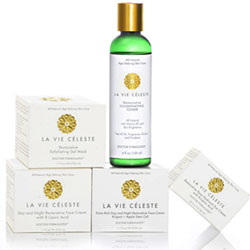
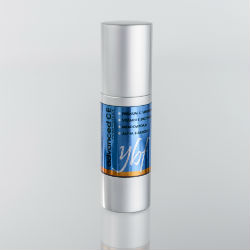
Come to think of it, Lumixyl has a glycolic peel, brightening cream and a sunscreen. I now think all those stages are necessary. However, I do understand that most of us don’t like to feel locked into an entire range and I think its fine to mix and match with your favorite exfoliator (some kind of glycolic peel - Juice Beauty ($45 in the shop) or La Vie Celeste ($60 in the shop) to name a few - or an antioxidant/exfoliator such as Your Best Face Prep would be ideal) and sunscreen.
Regarding the melanin inhibitor, there are a confusing number of actives to choose from and so here’s a rundown of some of the most common.
Hydroquinone is an effective inhibitor of melanogenesis. But it achieves this by being cytoxic to melanocytes. Concerns about cancer have restricted the use of hydroquinone in Europe and Japan. Generally, these days, people try to find alternatives.
Tyrosinase inhibitors are alternatives to hydroquinone that are considered safer. Melanin forms through a series of oxidative reactions involving the amino acid tyrosine in the presence of the enzyme tyrosinase. Hence, some actives focus on inhibiting tyrosinase.
One such active is decapeptide-12, a synthetic peptide comprising a sequence of amino acids developed by dermatological researchers at Stanford University.
SymWhite 377 (phenylethyl resorcinol) is a synthetic compound partly derived from natural lightening compounds in scotch pine bark. Studies have shown that it is effective at brightening skin without harmful side effects.
Arbutin (hydroquinone-beta-D-glucopyranoside) A glycosylated hydroquinone found at high concentrations in certain plants and capable of surviving extreme and sustained dehydration, arbutin has been shown to inhibit melanin synthesis by inhibition of tyrosinase activity. A one-month study on 80 Chinese women, using a 1% alpha arbutin concentration, resulted in a “skin lightening effect”. It was faster and more effective than kojic acid (see below).
Glabridin (licorice extract) inhibits tyrosinase activity of melanocytes without cytotoxicity. Having said that, most of the research on licorice extract is on its antioxidant properties.
Magnesium ascorbyl phosphate is a non-irritating, stable form of vitamin C. It can be used at concentrations as low as 10% to suppress melanin formation.
Hexylresorcinol: In vivo studies conducted on .5% hexylresorcinol in 2007 demonstrated lightening results that were just as effective as 2% hydroquinone over an eight-week period.
Cinnamomum subavenium is one to look out for. As Sarah reported, two chemicals have been isolated from this plant that can block tyrosinase at only a 1% concentration. As far as we know, it hasn’t yet made it into cosmetic products, but we will be excited to try it out when it does.
Some hyperpigmentation actives that, for various reasons, might be best avoided include:
Azelaic acid is a rather weak competitive inhibitor of tyrosinase in vitro. In addition, azelaic acid has an antiproliferative and cytotoxic effect on melanocytes.
Kojic acid decreases melanin content, but it is dose dependent (at 1% or less, it doesn’t work) and at higher doses can be a strong irritant.
Retinoids such as tretinoin and adapalene are derivatives of vitamin A. The mechanisms for reducing pigmentation include inhibition of tyrosinase induction, interference with pigment transfer, and acceleration of epidermal turnover. They also have the ability to disperse pigment granules within keratinocytes. Retinoids may act as penetration enhancers when used with other lightening agents such as hydroquinone and mequinol. The most common adverse effects include burning, stinging, erythema, dryness, and scaling. Although the adverse effects are reversible, retinoid use may result in hyperpigmentation, especially in dark-skinned individuals.
I'm going to be working on my exfoliate, protect, inhibit and light therapy hyperpigmentation regimen and will report back as I find (hopefully) combinations of products that work.





©2015 truthinaging.com



Truth in Aging reviews anti-aging serums, moisturizers, eye creams and more. To find the best natural skincare, we test products for 30 days and share our experiences in objective reviews. Only products recommended by our community are sold in the Truth In Aging shop.

 Loading...


July 1, 2015
by Susie
Hi all the beauty experts
I am new to this website. Do you all know what is Melasma - deeply hypigmentation. Often happens to Asian people. Bad luck or the genes. Spend money on all the products. Eventually come out to be wasting money and did not help at all. Only looking for one miracle cream that fading slowly and sign of improvement. Eventually, ended up full of skin care creams. Stubborn - Melasma - very hard to dig into the under the surface of the dermis not epidermis . Have done with laser and other kind of DERMA pen etc. which is needling - not much help. Expensive but conclusion is Zero achievement.
BEauty circle - thousands of cream but if really not sure. Do not recommend to customers like myself. Make sure the customers who have or had - melasma , after using the creams ( from whatever source of cream) etc. that recommend. Result prove that it did work and slowly fading but daily routine etc. Then final result pass it to customers like myself. DO not just make a false assumption etc. that it was all about making $ and more orders to meet your skin care or cosmetic target. Internet web site - customers who have been conned by any kind of skin care of their needs such as mine. I will go to website and asking for customer reviews not one but many .
Yes, given up but to put on foundation and twice the layer to cover up my melasma. Not whole face but certain parts of the face. It affect my self esteem and causing depression. To overcome this issues - to put on foundation to cover the problems. I like to have normal and no pigmetation skin on my face. Just put day cream and sun screen to work. Less the foundation the better. In order to continue my this imperfection issues. i have to use whatever ways of cosmetic items to overcome my issues.
Please sincerely read my message and give me any hope.
October 9, 2014
by nina
Hi Lady's. I been struggling with brown spots on my face and I spend a lot money on different creams.i started using NUANCE skin care by selma hayek. I use super concentrated aging serum and smooth and firm elixir. This two creams totaly changed my skin. My brown spots are 85% gone.skin its smooth.and I just also add in my routine ISOMERS all in one line.im happy rght now with my skin. I hope this helps for all of you with skin problems
All my friends are on this creams and they love it. Good luck NINA
July 29, 2014
by Carmen
I had horrible results from IPL treatments. Five treatments were $800. I also had
2 touch up treatments for $50 each. These were performed at the Skin and Laser Center in Grosse Pointe, MI.
During this process I used a retinol cream (not during treatments), skin cleanser,
c&e cream, and a broad spectrum sunscreen.
After all of this, I did not notice a change. I went to my dermatologist who works in conjunction with the Skin and Laser Center.
I don't know what type of instrument he used, but I look horrible.
The left side of my face looks like I have acne scars (they look like pick marks),
and the right side of my face has these large black marks on it. The black marks
resulted after seeing my dermatologist.
RIght now I am using the Arcona Youth Serum/Repair, facial cleanser, and suncreen. The youth serum is the only Arcona product I recently bought.
I read something about green light therapy. Would that help me? What would
you suggest as a regimen? Should I discontinue the retinol?
The doctor at the laser center called me, because I made an appointment to discuss getting my money back. He said we don't refund blah, blah, blah, I stand
behind my work, I don't want anyone to be unhappy, blah,blah,blah.
Please help me.
Thank you.
Carmen
.
April 23, 2013
by Marta
Hi Ayaba, Regu Fade is an ingredient and is the name under which trans resveratrol is sometimes marketed. You can find transresveratrol in Your Best Face Products: http://www.truthinaging.com/your-best-face-correct-control-duo
April 23, 2013
by ayaba esteri
Hello Marta / Darrell,
Is REGU FADE an otc product or an ingredient in lightening creams?
I have serious hyperpigmentation and bleach burns around my outer check area up to my temples that have defied solutions for years. I would like to try products with trans resveratrol. I've looked for the brand Regu Fade but can't seem to find any off the counter products.
Can you point me in the right direction please? Where can I get them to buy? AYABA.