You have no items in your shopping cart.
Problems Adding to Cart? Click here for assistance.

The honest truth about beauty & personal care products


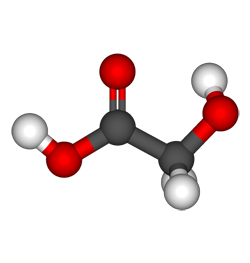
Even if you think you have got your head around the differences between alpha hydroxy acids (AHAs) and beta hydroxy acids (BHAs), not to mention the subsets thereof like glycolic acid, it can still be difficult to choose the right product and regime. Especially when one's skin has a split personality. Most of us can relate to the member of the Truth In Aging community who wrote in and said: "I am 53 and have combination skin (which tends to be very oily in summer and rather dry in winter) and am STILL prone to break-outs." Should she use AHAs or BHAs? Conceivably both, but I am running ahead of myself.
First a quick reprise. Alpha hydroxy acids are clinically proven to loosen the glue-like substances that hold skin cells together, thus shedding the top layer of dull, damaged skin. Glycolic acid is a type of alpha hydroxy acid (AHA) naturally found in sugar cane. As the AHA with the smallest molecule and the greatest penetration, glycolic acid deeply exfoliates to remove skin that is dry, coarse, or dead. Ammonium glycolate is a form of glycolic acid. Other AHAs include mandelic acid, made from bitter almonds, citric acid, malic acid (from apples) and lactic acid.
Unlike alpha hydroxy acids, which are water soluble, beta hydroxy acids are lipid (oil) soluble. This means that they not only exfoliate the upper layer of skin, but also penetrate deep through the epidermis to exfoliate the dead skin cells and excess oil built up in the pores. For this reason, BHA's are frequently used to treat blackheads, whiteheads and acne. Yet its keratolytic ability is not the only reason for why it is so often administered to treat blemishes and breakouts. Beta hydroxy acid also functions as both an antimicrobial and anti-inflammatory agent, making it an ideal anti-acne ingredient. BHA is organic acid that's either biosynthesized or extracted from the bark of a willow tree. The compound is known as salicylic acid or salix alba extract.
So what to use when? This is a largely personal view, but here goes. I am a great believe in horses for courses. Every morning, I peer into the mirror and try to access what kind of a skin day I am about to have. If I look prone to a breakout then I will reach for a cleanser such as Epicuren's or PrescribedSolutions, which has salicylic acid.
However, I wouldn't use BHA/salicylic continuously, or at all if I was pregnant. Reproductive and developmental toxicity have been associated with exposures to large, therapeutic serum concentrations of Salicylic Acid (as a metabolite of aspirin). That means you'd have to be exposed to an awful lot, but even so.
Back to AHAs then. How much and how often rather depends on your sensitivity levels and the state of your skin. If your skin is rough and dull, then a potion with glycolic (see our Five Best for inspiration) could be used four or five times a week. I would definitely use a collagen boosting serum over the top. As the skin clears, you can start to ease back. I first started using IMAGE Skincare every other day a year later I am down to a couple of times a week on those days when the Clarisonic Brush isn't quite enough.
High concentrations of glycolic acid, such as the 29.5% in Glytone should be reserved for heels and elbows. Because this top layer of skin provides some (albeit minimal) protection from the sun, there is an increased risk of sun sensitivity after using an AHA.




©2015 truthinaging.com



Truth in Aging reviews anti-aging serums, moisturizers, eye creams and more. To find the best natural skincare, we test products for 30 days and share our experiences in objective reviews. Only products recommended by our community are sold in the Truth In Aging shop.

 Loading...



November 25, 2014
by 5
Is it ok to use an hyalauric serum over the glycolic acid?
February 24, 2013
by a
totally confusing.for example if I use my aha cream night can I use egf under it?can I use aha in morning because nights will be passed with egf or retinol or retin a.alsıo if I only can use it in morning cant I use vitamin c or peptide serums before aha crem?thanks
January 20, 2010
by marta
Hi Junko
I still keep coming back to IMAGE Skincare Ageless. It is a very good team player
January 18, 2010
by Junko
Marta, Thank You for helping to educate us. I think I'm using a blend, LacSal Serum from Skinbiology (10% Hydroxy Acid, 8.5% Lactic Acid + 1.5% Salicylic Acid) I like it, but it's not wanting to play well with others (even after it's fully absorbed). Any suggestions on other AHA/BHA blends, sans parabens (LacSal has 2) that might be better & more accepting of the layering that Christine recommends?
January 11, 2010
by Thia
I keep reading about aha and copper peptides. I've visited many a site trying to research CPs. Keep coming back with rave reviews. But my question is, if CPs are so incredible at reducing wrinkles, scars and promoting collagen renewal then why doesn't everyone use them? Is there truth in any of the reviews?
I ask only because I'm tired of constantly trying new products. I'd love to try CPs (actually quite inexpensive) but I want to hear your opinion please.
Thanks!