You have no items in your shopping cart.
Problems Adding to Cart? Click here for assistance.

The honest truth about beauty & personal care products

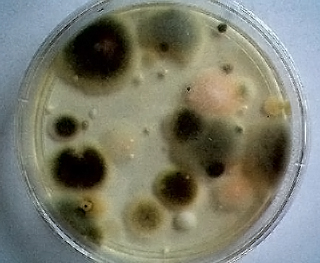
Parabens get a bad rap. Some products proclaim themselves paraben-free. But are they really that bad and isn't the stuff that they prevent (the formation of nasty bacterias) potentially more harmful? What about the alternatives? Do they work and are they safer?
Parabens are preservatives and they are incredibly ubiquitous; you will find them in cosmetics and all manner of hair care products. They are esters of para-hydroxybenzoic acid and common parabens include: methylparaben (which can occur naturally in blueberries), propylparaben, butylparaben. Less common are isobutylparaben, isopropylparaben and benzylparaben.
The fuss started when a 2004 study linked parabens in deodorant to breast cancer. Because parabens mimic human estrogen and it is known that estrogen stimulates cancer, the link seemed plausible. The study has since been discredited and the American Cancer Society has concluded that there is insufficient scientific evidence of parabens increasing breast cancer risk. And a 2005 study said it is "biologically implausible that parabens could increase the risk of any estrogen-mediated endpoint, including effects on the male reproductive tract or breast cancer".
So if parabens are by and large not carcinogenic, what's not to like? Allergies to individual parabens are rare, but there is a high incidence of cross-reaction so a combination of parabens in one product increases the likelihood of a reaction. Many cosmetic and hair products contain up to four or five parabens.
The other reason to avoid parabens is environmental damage. According the Environmental Protection Agency: "the continual introduction of these benzoates (parabens) into sewage systems and directly to recreational waters from the skin leads to the question of risk to aquatic organs." So be nice to fish and use alternatives where possible.
What about the alternatives? Are they any better?
Unfortunately, many other effective preservatives have safety issues. DMDM hydatoin releases formaldehyde. Kathon, a synthetic preservative, was cited as a "major cause of cosmetic allergy" by a study conducted by a Dutch dermatologist. Sodium benzoate produces a carcinogen when it encounters vitamin C and a British study has linked it DNA degeneration.
Safe, but mild, preservatives do exist and they include: phenoxyethanol, potassium sorbate and - as far as I can tell - sodium levulinate and propyl gallate.
UPDATE - 2/28/08 My mother-in-law, Monique (who irritatingly has some rare and amazing wrinkle resistant gene), sent me some clippings from French magazines. I noticed that journalists in France seemed to be concerned about phenoxyethanol. I did some more research and found out that it is considered to be extremely toxic and concentrations in cosmetics are severely limited in Japan. This is what a company who sells it to laboratories has to say about it:
"Extremely hazardous in case of eye contact (irritant). Very hazardous in case of skin contact (irritant), of ingestion, of inhalation. Inflammation of the eye is characterized by redness, watering, and itching. Skin inflammation is characterized by itching, scaling, reddening, or, occasionally, blistering."
Marta adds: I got pulled up - quite properly - by a reader regarding the quote above. It should be noted that the manufacturer is referring to its raw state at 100% concentrations.
UPDATE - 3/8/08. I have just come across methylisothiazolinone: Deemed safe in Europe, the US and Japan, there is however one study on rats that demonstrated it is a neurotoxin. At best, there is insufficient
data to say that this is safe at this stage.
UPDATE - 6/4/08 The FDA issues a warning on phenoxyethanol



©2016 truthinaging.com



Truth in Aging reviews anti-aging serums, moisturizers, eye creams and more. To find the best natural skincare, we test products for 30 days and share our experiences in objective reviews. Only products recommended by our community are sold in the Truth In Aging shop.

 Loading...

May 1, 2015
by Pat
I know this was last year when Rachel was having so many problems with her products and inflammation around her eyes.
I too have had many severe problems with lots of products. You don't know what you don't know until someone tells you, is my theory.
So my advice. Cosmetic and facial care companies will not give you an entire list of what is in their products but, you may want to do what I did.
Find a product read the ingredients - go home google or search one ingredient at a time. Yes this may be time consuming but......
What I have found that works great for me with no reactions and all of their products are pure, safe and beneficial. I'm over 60 and I have never looked better.
The products are Arbonne and they have been around for 35 years. I believe that says something for itself.
Vegan certified No Animal Products No parabens No Paba No Formaldehyde No petroleum based ingredients such as mineral oil, Benzene, Petrolatum, Phthalates or Toluene
April 14, 2014
by Rachel
Hi all,
For the past five years I have been struggling with eye allergies which I believe is caused by makeup. Ever since I had a makeup trial for my wedding, I woke the next day with inflomation of the bottom eyelid with redness along the top of it also eyeness of the eye ball, itchiness, white discharge, burning when I close my eyes and sensitivitie to light. I have seen every possible person to try help me when I get these 'flare ups' which will last weeks until I use FML eye drops. No one has seemed to come up with a proper reason this is happening. Each one says different things.. Staff infection, slow tear ducks, dry eye and so on!! I even had a allergy arm test $400+ to have an end result that I'm not allergic to any of the normal allergy factors dog hair, dust, pollen ect.. So I have been doing my own research and I think it must be something in the costemics! Would it be parabens? or is there something else I should also try banish from the products I try next?? I'm so fed up with it happening every couple of weeks and my eyes have never seemed to be white since :(
October 15, 2013
by Keith
Hi
Just found this site and saw your comment on Methylisothiazolinone, do you know what it really is?
Isothiazolinone is a watered down version of the deadly pesticide Alkyl DiMethyl Benzyl Ammonium Chloride. A residual, synthetic hormonal pesticide poison which in the concentrated state will burn the flesh off your bones.
It is a quartenary Ammonium compound which were reported by medical staff in American hospitals in 1984 as being ineffective against many bacteria, causing skin allergic responses, and these chemicals form a bio-film over skin which allows harmful bacteria to survive and multiply to increase the risk of infection.
Prof Patricia Hunt proved in 2008 that just the residue from the use of cleaning chemicals containing these quartenary Ammonium compounds, is enough to cause an epidemic of birthing difficulties, and birth defects in mice. Reduce the egg number and size in females and the number and size of sperm in males. Who share 98% of genes with US!
In the early 1940s doctors in Europe treating the first patients suffering from severe burns from medicinal skin creams with these chemicals, reported in the Oxford Medical Journal that these chemicals are too dangerous for use on human beings.
The doctors who fought to have the last plant manufacturing Dioxin shut down said that when you are dealing with a hormonal poison there is NO SAFE level of exposure as they bio-accumulate.
I have just returned from traveling in China where they manufacture these chemicals in giant plants as big as cities, and just before I left the Chinese government admitted they are manufacturing these chemicals, and as a result they now have whole villages in the surrounding areas they call cancer villages, because every man, woman and child has cancer.
And you thought Phenoxyethanol was a SOB!
I have been working with natural products for a number of years now and there are some very good natural preservatives BUT as with anything there are always those who are allergic to them, And they are more expensive.
For more information google Mian sanctuary.
June 24, 2011
by Interview with Teri Dourmashkin, Founder of La Vie Celeste - GotInterviews.com
[...] being said, I don’t use parabens and I don’t need to. But I do think that they need to be re-examined. Recent research shows [...]
July 13, 2010
by Julie Kay
My dermatologist is a good doctor, in my opinion. We've discussed skin care products- even as far as what we'd each like to see if we (either or both- no, we've never talked about collaboration) marketed our own products, theoretically. That said- in his office he touts Obagi, the entire line. Obagi uses parabens. /shrug* Now my dermatologist isn't ignorant and sitting back in his office thinking about developing a product and/or treating patients daily and offering them a product that would, in his opinion, harm them. Just saying... I trust my dermatologist. ~jk
ps this is not to say some people can't have a sensitivity to parabens or any other ingredient... but overall parabens do do their job in a product. I try whenever possible to keep them out of the scenario, but I do know the relavence of preservation.