You have no items in your shopping cart.
Problems Adding to Cart? Click here for assistance.

The honest truth about beauty & personal care products



When I first tried out a green LED light, I frankly suspected that this would turn out to be one of those nice to have things that aren’t really necessary to life and end up at the back of the bathroom cabinet – the personal care equivalent of a waffle maker. I quickly realized that green LED – for controlling hyperpigmentation – is definitely a goer. But more surprising is that, as the summer progresses, I am going green with a vengeance. A friend emailed me with a similar observation and we realized that different colored LED lights seem to favor seasonal use. Here's how:
Summer goes green
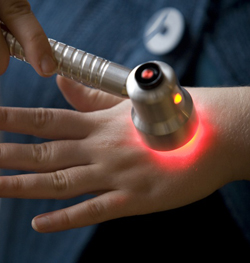
Green LED light helps with skin discoloration. So as summer gives me more exposure to sunlight, I have found that I reach for the green light when I get out my Sirius Aurora ($149). The backs of my hands are in particular need of it as, despite the use of sunscreen, they are looking a distinct shade darker than the skin on the rest of my face and body. I haven’t seen much independent research behind green LED (as opposed to the well-documented red light), but I am seeing results on my skin in terms of a slight fading of dark spots and more even tone in general. Theoretically, green light targets melanocytes, melanin-producing cells located in the bottom layer of the skin's epidermis. According to Sirius, it inhibits the production of excess melanin, prevents it from traveling to the skin’s surface, and breaks up melanin clusters to diminish existing discoloration.
LED lights (of all colors) can be enhanced by the use of a topical cream or serum that performs a complimentary function. I find that green LED and Lumixyl’s Topical Brightening Crème work really well together.
See red in fall and spring
Red LED is for plumping the skin. Even NASA has recognized that it is therapeutic for the skin and can help heal wounds. Of course, it’s a must year-round, but seems even more necessary in fall and spring when we want to help retain or jump-start collagen production. stimulating the body’s tissues to convert the light energy into cellular energy. Most researchers agree that light therapy increases production of ATP (the energy engine of cells) and the modulation of reactive oxygen. It may also work by targeting water layers on elastin, reducing the appearance of facial wrinkles.
I always use an antioxidant serum with red light. Although the long-term effects of LED are detrimental to radical scavengers, in the short-term it can stimulate them. Researchers have shown the short-term effect can be counteracted with antioxidants such as green tea. I use Your Best Face Antioxidants Concentrate.
Winter blues
I am much more prone to breakouts in winter when my skin is dry and sensitive. This is when blue LED light can come into its own. Blue light wavelengths pass to the skin and produce singlet oxygen that can destroy acne-causing bacteria. These targeted bacteria that produce the inflammation associated with acne are known as propionibacterium acne’s, or “P. acne’s”. P. acne’s releases porphyrins, which are naturally occurring molecules in the body. When porphyrins are exposed to certain wavelengths of light, free radical damage is produced, which destroys the bacteria.
Think about pairing blue LED with Tilvee’s Cranberry Balancing Lotion or Your Best Face Defend.
I am not suggesting that all you should only use your LED colors seasonally. But hopefully, this will inspire you to play around and use light therapy as it suits your needs.




©2015 truthinaging.com



Truth in Aging reviews anti-aging serums, moisturizers, eye creams and more. To find the best natural skincare, we test products for 30 days and share our experiences in objective reviews. Only products recommended by our community are sold in the Truth In Aging shop.

 Loading...



September 29, 2013
by Marta
Both red and green light will be helpful for broken veins, Linda.
September 29, 2013
by Linda
Hi , Just wondering if any of the led on my ultrarenew are good for spider veins ?
Thanks
October 28, 2012
by Michelle
So using red wavelengths of light can induce free radical damage? I used red light on my sun damaged skin and I look older and worse now ... Wondering if that's why. Thanks! Just trying to understand all of this among the madness. Only want to restore my skin's ability to produce collagen, elastin and hyaluornic acid... To moisturize itself as opposed to me having to lather oil on it at night and lotion on it all day. I need to kind of resurface the skin under my eyes cuz it got fried when I got a sunburn and didn't treat it. Now I'm confused about light therapy... Thank you.
October 10, 2012
by Marta
Hi Maria, its the long term effects are positive. It's the short-term effects that are of concern. That is why it is advisable to apply an antioxidant serum while using the device - to counteract the short-term pro-oxidative effects
October 9, 2012
by maria
So does one have to worry about the longterm effects of the red light?
per your comment "Although the long-term effects of LED are detrimental to radical scavengers, in the short-term it can stimulate them." thanks